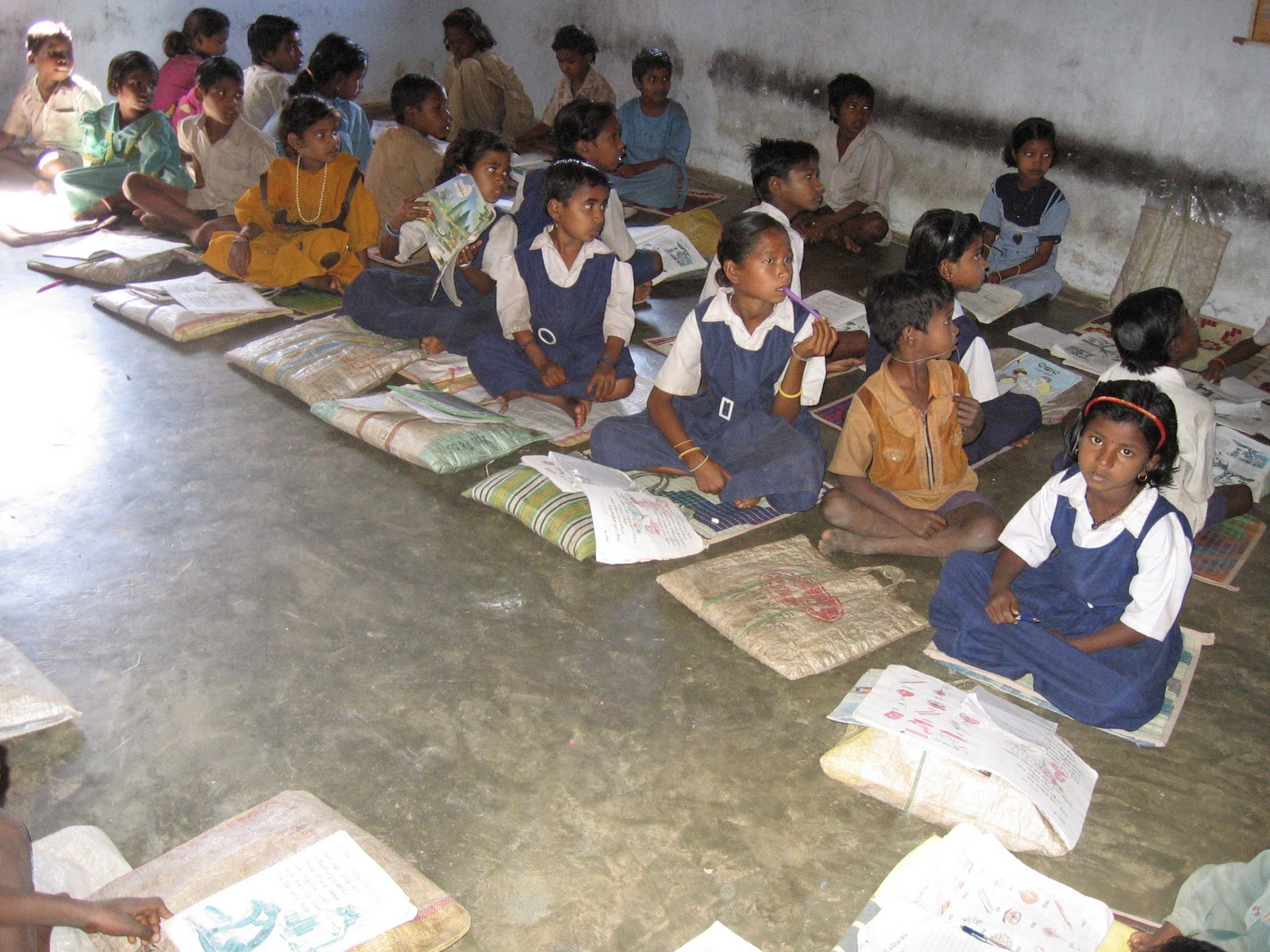
The pervasive notion that 'nothing has been done in education in India' could not be further from the truth. In fact not only has a great deal been done, but its consequences have been faced over decades. In particular, what follows applies to introducing educational designs based on local context, using the experiences and strengths of the stakeholders, creating a situation where they play an active role in determining and implementing processes.
Though obviously much must have been done over the decades till the 80s, my experience ranges from mid-80s, when I was part of a team working on such classroom practices, textbooks and educational designs from 1986 onwards. Implementation of the programme called Prashika (Prathamik Shiksha Karyakram) focused on marginalised groups, with the team living in a tribal area as well as in a rural, deprived pocket and introducing the innovation in government primary schools. The work in Prashika was pathbreaking in many, many ways (integration of 5 subjects at the primary level, incorporation of multiple local languages, a hugely localised textbook/workbook that could only be completed with each child contributing, called Khushi-Khushi - still not matched anywhere, I believe). It provided hope that much was possible despite the difficulties faced and informed many of the later efforts that followed, both in the government and the NGO sector.
Later in DPEP - particularly Kerala, Assam, Karnataka, Haryana, UP, Bihar, TN, Nagaland and later with SSA Gujarat further work was done. Localised training, contexualisable textbooks (some really brilliant stuff still not matched anywhere - and that's a professional opinion), teacher determined assessment system, involvement of community knowledge, children constructing local histories / local environment books, peer learning and assessments, textbooks that would be 'complete' only along with a set of 50 district-specific books kept in the school library.... many, many innovative and large scale measures were conceived and actually implemented using a strategically developed implementation plan.
In each first five states we were able to see 2-3 years of implementation, development of hundreds / thousands of teachers who implemented contextualised learning, a high degree of in-class practice backed by supportive, localisable material. These states changed their position in the national achievement surveys too, with Kerala rising to the top (it had been fairly close to the bottom before this, below Bihar in the first national survey). In the case of Gujarat, field testing was done in 630 schools, researched by MSU Baroda with very encouraging findings.
However, as long as we were not visibly successful there were no problems. When change began to be visible on some scale and a palpable sense of energy was witnessed among teachers and communities, alarm bells began to ring. in each of these states, the powers that be - especially at state level, state institutions, administrations, political parties - found that this went against the command-and-control structures conducive to them being able to assert their authority. Schools didn't want to be told what to teach when and how - they had their own plans. Empowered teachers / school heads / even some VECs refused to kowtow to mediocre ideas or corruption oriented bosses - leading to huge conflicts all over the place. Unfortunately these never got reported, recorded or researched. The results were mass scale transfers, cases against state project directors who encouraged this (Kerala SPD was charge sheeted, Karnataka SPD given punishment posting in North Karnataka, Assam SPD sent to conflict zone during worst riots, Bihar SPD transferred to PHED and later kept without posting), the re-casting of State Resource Groups from those selected for tested capabilities to those stocked with ex-officio positions, the emasculation of the BRC-CRC structures from genuine teacher support institutions into data collection centres (believe it or not, we did have functional BRCs CRCs at one time!), the centralisation of powers away from the VECs and re-casting into SMCs with a different function, and major shift in recruitments away from districts to states (in one state the Education Minister held a Recruitment Mela in a stadium to personally appoint 3000 para-teachers).
Interestingly, Prashika in MP faced a similar adminstrative backlash and was closed down.
Yes, like it or not, this is what ideas of empowerment through education come up against - and they fall short not because of lack of any purity in the idea itself or absence of rigour, but because after a point when it goes into implementation an idea is something else, and not its original pure self. You might look at the actual work and find it is not 'up to the standard' - yet when trying to create it for those who need education the most, other aspects need to be taken into account. Basically, empowering the weak is clearly seen by the strong as disempowering them - and the empire strikes back! One of the outcomes is that a few years later, it appears as if nothing has been done, and people gear themselves up to again come up with 'innovative' ideas, often weaker than might already have been tried, uninformed by the past.
Though obviously much must have been done over the decades till the 80s, my experience ranges from mid-80s, when I was part of a team working on such classroom practices, textbooks and educational designs from 1986 onwards. Implementation of the programme called Prashika (Prathamik Shiksha Karyakram) focused on marginalised groups, with the team living in a tribal area as well as in a rural, deprived pocket and introducing the innovation in government primary schools. The work in Prashika was pathbreaking in many, many ways (integration of 5 subjects at the primary level, incorporation of multiple local languages, a hugely localised textbook/workbook that could only be completed with each child contributing, called Khushi-Khushi - still not matched anywhere, I believe). It provided hope that much was possible despite the difficulties faced and informed many of the later efforts that followed, both in the government and the NGO sector.
Later in DPEP - particularly Kerala, Assam, Karnataka, Haryana, UP, Bihar, TN, Nagaland and later with SSA Gujarat further work was done. Localised training, contexualisable textbooks (some really brilliant stuff still not matched anywhere - and that's a professional opinion), teacher determined assessment system, involvement of community knowledge, children constructing local histories / local environment books, peer learning and assessments, textbooks that would be 'complete' only along with a set of 50 district-specific books kept in the school library.... many, many innovative and large scale measures were conceived and actually implemented using a strategically developed implementation plan.
In each first five states we were able to see 2-3 years of implementation, development of hundreds / thousands of teachers who implemented contextualised learning, a high degree of in-class practice backed by supportive, localisable material. These states changed their position in the national achievement surveys too, with Kerala rising to the top (it had been fairly close to the bottom before this, below Bihar in the first national survey). In the case of Gujarat, field testing was done in 630 schools, researched by MSU Baroda with very encouraging findings.
However, as long as we were not visibly successful there were no problems. When change began to be visible on some scale and a palpable sense of energy was witnessed among teachers and communities, alarm bells began to ring. in each of these states, the powers that be - especially at state level, state institutions, administrations, political parties - found that this went against the command-and-control structures conducive to them being able to assert their authority. Schools didn't want to be told what to teach when and how - they had their own plans. Empowered teachers / school heads / even some VECs refused to kowtow to mediocre ideas or corruption oriented bosses - leading to huge conflicts all over the place. Unfortunately these never got reported, recorded or researched. The results were mass scale transfers, cases against state project directors who encouraged this (Kerala SPD was charge sheeted, Karnataka SPD given punishment posting in North Karnataka, Assam SPD sent to conflict zone during worst riots, Bihar SPD transferred to PHED and later kept without posting), the re-casting of State Resource Groups from those selected for tested capabilities to those stocked with ex-officio positions, the emasculation of the BRC-CRC structures from genuine teacher support institutions into data collection centres (believe it or not, we did have functional BRCs CRCs at one time!), the centralisation of powers away from the VECs and re-casting into SMCs with a different function, and major shift in recruitments away from districts to states (in one state the Education Minister held a Recruitment Mela in a stadium to personally appoint 3000 para-teachers).
Interestingly, Prashika in MP faced a similar adminstrative backlash and was closed down.
Yes, like it or not, this is what ideas of empowerment through education come up against - and they fall short not because of lack of any purity in the idea itself or absence of rigour, but because after a point when it goes into implementation an idea is something else, and not its original pure self. You might look at the actual work and find it is not 'up to the standard' - yet when trying to create it for those who need education the most, other aspects need to be taken into account. Basically, empowering the weak is clearly seen by the strong as disempowering them - and the empire strikes back! One of the outcomes is that a few years later, it appears as if nothing has been done, and people gear themselves up to again come up with 'innovative' ideas, often weaker than might already have been tried, uninformed by the past.


.JPG)